
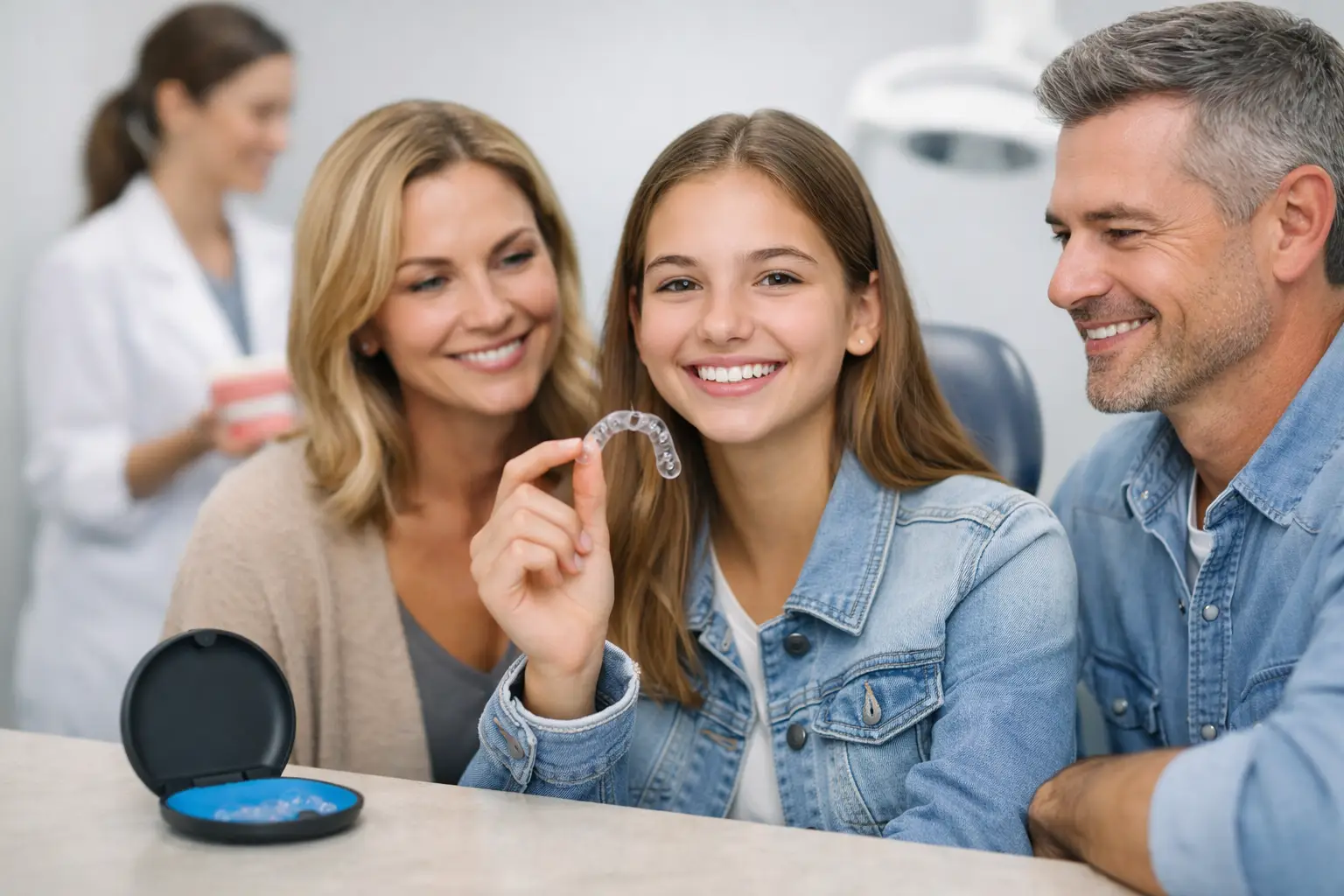
A teen can be excited about a less noticeable way to straighten their teeth and still have very practical questions: Will it hurt? Can they eat normally at school? What happens if an aligner goes missing? This guide to the teen Invisalign process gives families clear, realistic answers so treatment feels manageable from the first consultation through the final retainer.
Is Invisalign Right for Your Teen?
Invisalign treatment uses a series of clear, custom-made aligners to gradually guide teeth into healthier positions. For many teens, the appeal is obvious: the aligners are removable, smooth, and far less visible than traditional braces. They can take them out for meals, brushing, sports, and special occasions.
But clear aligners are not automatically the best choice for every smile. The right recommendation depends on the teen’s tooth alignment, bite, jaw development, oral health, and ability to wear aligners consistently. Invisalign can address many common orthodontic concerns, including crowding, spacing, certain bite problems, and teeth that have shifted. More complex concerns may be treated successfully with aligners, braces, or a carefully planned combination of approaches.
The most useful question is not, “Are clear aligners better than braces?” It is, “Which option gives my teen the most predictable, healthy result?” A personalized orthodontic evaluation provides that answer without guesswork.
The Teen Invisalign Process, Step by Step
Start with a focused orthodontic consultation
The first visit is a chance to understand what is happening below the surface, not simply whether a teen wants straighter teeth. The orthodontist examines the teeth and bite, reviews health history, and discusses goals such as improving confidence, making cleaning easier, or correcting a bite that affects comfort and function.
Digital photographs, X-rays, and 3D imaging may be used to create a detailed picture of the smile and jaw relationship. This planning matters because teeth need to move in a way that supports long-term bite health, not just a more even-looking smile.
Families should leave this visit with clear guidance about whether Invisalign is appropriate, what treatment is expected to accomplish, the anticipated timeline, and the financial options available. There is no benefit to rushing a decision. Good orthodontic care starts with a plan that fits both the teen’s needs and the family’s routine.
Create a custom digital treatment plan
If Invisalign is the right fit, the orthodontic team takes a precise digital scan of the teeth. This replaces the goopy impressions many parents remember from their own orthodontic treatment. The scan is used to design each stage of tooth movement and create a series of custom aligners.
A digital treatment preview can help teens see how their smile is expected to change over time. It is encouraging, but it is not a substitute for expert oversight. Teeth do not always move exactly the same way on every patient, which is why scheduled progress visits remain part of treatment.
Some teens also need small tooth-colored attachments. These are tiny, carefully placed shapes bonded to selected teeth that give the aligners a better grip for specific movements. They are usually subtle, and they are removed when treatment is complete. In some cases, the orthodontist may recommend a small amount of space creation between teeth to support safe, precise alignment.
Receive aligners and learn the routine
At the delivery appointment, your teen receives their first sets of aligners and specific instructions for wearing and changing them. Most teens wear their aligners about 20 to 22 hours each day, removing them only to eat, drink anything other than water, brush, and floss.
That daily wear time is the central responsibility of Invisalign treatment. The aligners work only when they are in the mouth. A teen who wears them faithfully can often enjoy an efficient, predictable experience. A teen who regularly leaves them in a backpack, pocket, or napkin may see slower progress and need extra appointments or replacement aligners.
The first few days with a new set can bring pressure or tenderness. That feeling is generally a sign that the aligners are applying gentle force, and it usually settles quickly. Reading aloud, wearing aligners consistently, and using the orthodontist-recommended seating tools can help the mouth adjust.
Making Invisalign Work at School and Home
Clear aligners offer flexibility, but they also ask for organization. For busy teens in Westminster and nearby communities, a few simple habits can keep treatment from becoming another stressful item on the schedule.
A protective aligner case should travel everywhere. The safest rule is simple: if the aligners are not in your teen’s mouth, they go directly into their case. Wrapping aligners in a lunch napkin is one of the most common ways they are accidentally thrown away.
A small school kit can make the routine easier. It may include a toothbrush, toothpaste, floss, the aligner case, and a travel-size cleaning option approved by the orthodontic team. Brushing after lunch is ideal. If that is not possible, rinsing well before putting aligners back in is better than placing them over food debris or sugary drinks.
Teens should remove aligners before eating. They can drink water while wearing them, but hot drinks can warp the plastic, and colored or sugary beverages can stain aligners or trap sugar against teeth. This does not mean your teen has to skip every coffee-shop treat or sports drink. It means they need to take the aligners out, enjoy the drink, clean their teeth when possible, and put the aligners back in promptly.
Sports are usually straightforward. Unlike braces, aligners can be removed for a custom sports mouth guard. For contact activities, a properly fitted mouth guard remains a smart choice for protecting teeth and soft tissues.
Check-Ins Keep Treatment on Track
Invisalign involves fewer in-office adjustments than braces, but it is not a do-it-yourself system. Progress visits allow the orthodontist to confirm that aligners fit properly, teeth are tracking as planned, and the bite is responding well. The schedule varies by patient, but appointments are designed to keep treatment moving without adding unnecessary disruption to school, work, or family life.
At these visits, the team may provide additional aligners, review wear habits, assess attachments, or make adjustments to the treatment plan. Honest communication helps. If your teen has not worn aligners as consistently as planned, or if an aligner feels unusually loose or does not fit, say so early. Small concerns are usually easier to correct before they become larger delays.
Lost or damaged aligners are also manageable. Contact the orthodontic office for instructions rather than assuming your teen should simply move to the next set. Depending on the situation, the recommendation may be to wear the previous aligner, move ahead, or order a replacement.
What Happens When the Aligners Are Finished?
The final aligner is not the finish line by itself. Teeth naturally have a tendency to shift, especially during the teen years. Retainers hold the new positions while the surrounding bone and tissues adapt.
Your teen may receive clear removable retainers, a fixed retainer behind certain teeth, or both. The orthodontist will explain the recommended wear schedule based on the treatment completed and your teen’s specific bite. Retainer care deserves the same attention as aligner care: store them safely, clean them regularly, and bring them to follow-up visits when requested.
A confident smile is built through consistent care, not perfection. If your teen is ready to explore clear aligners, a consultation at 1st Impressions Orthodontics can provide the compassionate guidance and precise planning your family needs to choose the next step with confidence.