
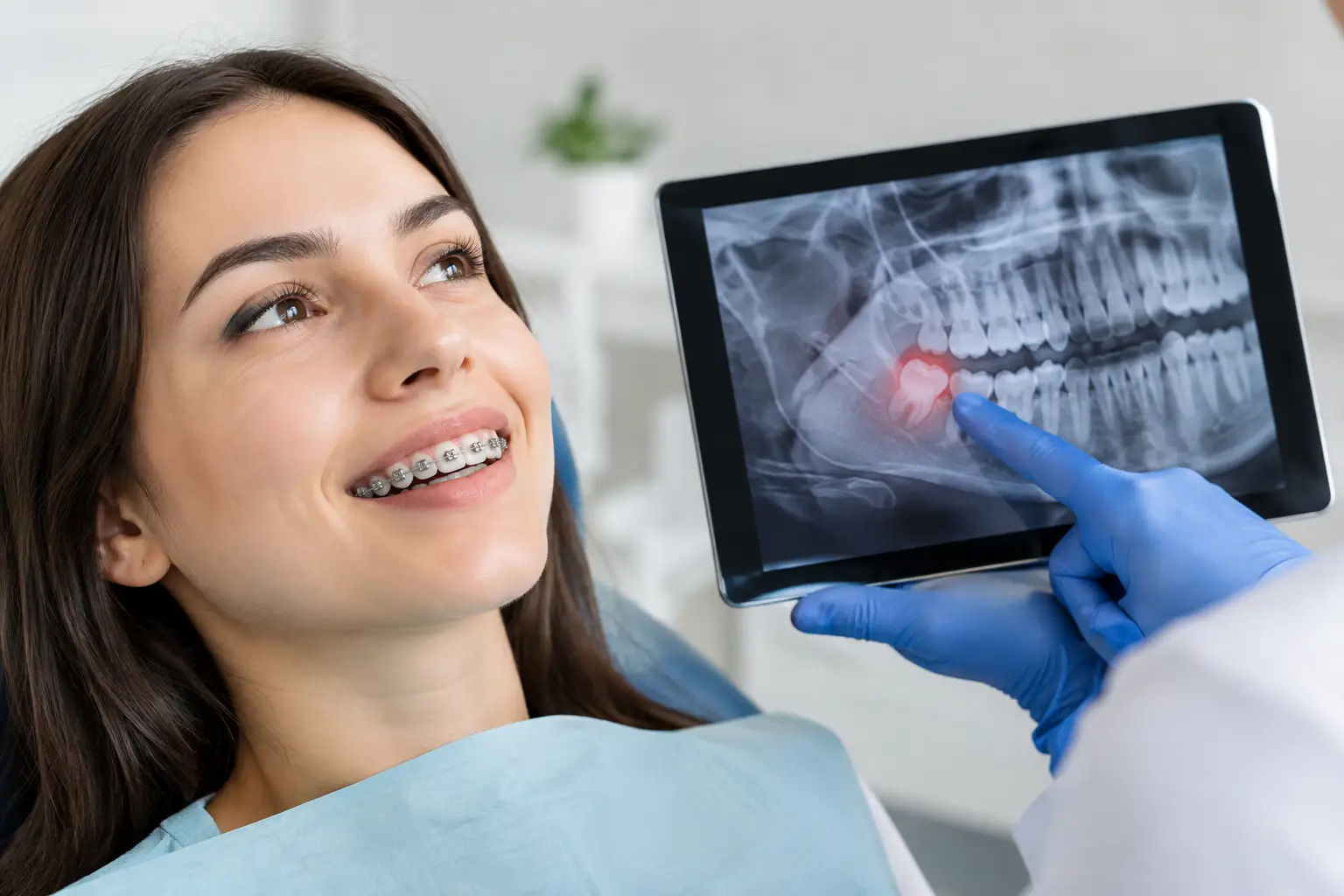
A tooth that does not come in when expected can create more than a gap in a smile. It may press against neighboring teeth, change the way teeth erupt, or remain hidden beneath the gums for years. Orthodontic treatment for impacted teeth creates a careful path for that tooth to move into the right position while protecting the health, comfort, and appearance of the rest of the smile.
For parents, this may come up when a child’s adult tooth seems late to appear. For teens and adults, an impacted tooth is often discovered during a routine exam, orthodontic consultation, or when a baby tooth has not fallen out. The good news is that a delayed tooth does not automatically mean a complicated outcome. With precise imaging and a personalized plan, many impacted teeth can be guided into a healthy, functional place.
What Is an Impacted Tooth?
A tooth is impacted when it is blocked from erupting into its normal position. It may be trapped beneath gum tissue or bone, growing at an angle, or crowded by neighboring teeth. The upper canine teeth, sometimes called eye teeth, are among the most commonly impacted teeth because they have a long path to travel as they develop.
Impacted teeth can also include front teeth, premolars, and wisdom teeth. Wisdom teeth are often managed differently from teeth that play an essential role in the bite. When a canine or front tooth is impacted, orthodontic care is often focused on preserving and bringing that natural tooth into the smile whenever it is clinically appropriate.
An impacted tooth is not always painful. In fact, many patients have no symptoms at all. That is why routine dental visits and orthodontic evaluations matter. Digital X-rays and 3D imaging can show the tooth’s exact location and direction before it causes larger concerns.
Why an Impacted Tooth Needs Attention
Leaving an impacted tooth untreated can sometimes lead to problems, although the right approach depends on the tooth’s position and the patient’s overall oral health. An impacted tooth may contribute to crowding, leave a neighboring baby tooth in place too long, or put pressure on the roots of adjacent teeth. In some cases, a cyst can develop around a tooth that remains beneath the gums.
There can also be a cosmetic and functional impact. A missing visible tooth may affect confidence, while a tooth that cannot erupt normally can alter spacing and bite alignment. Addressing the issue early often gives the orthodontist more options and may make treatment more straightforward.
That said, treatment is not one-size-fits-all. A deeply positioned tooth, a mature adult tooth, or a tooth located close to neighboring roots may require a different approach than a tooth identified in an eight- or nine-year-old child. Clear guidance starts with understanding what is happening beneath the gums, not guessing based on what is visible.
How Orthodontic Treatment for Impacted Teeth Works
The first step is a thorough orthodontic evaluation. Your orthodontist reviews the bite, spacing, tooth development, and images of the jaw. Advanced digital and 3D imaging can help pinpoint the impacted tooth and assess whether there is enough room for it to erupt safely.
If crowding or a retained baby tooth is blocking the path, the initial plan may involve creating space. This could mean removing a baby tooth, using an expander in a growing child, or beginning braces or clear aligner treatment to move surrounding teeth into more favorable positions. Sometimes, once adequate space is available, the impacted tooth begins moving on its own.
When a tooth needs additional help, orthodontic treatment may be coordinated with an oral surgeon or pediatric dentist. In a common procedure called surgical exposure, the specialist gently uncovers the crown of the impacted tooth and attaches a small orthodontic button or chain. Braces then apply a light, controlled force to guide the tooth gradually into the arch.
This is a team process, but it should never feel confusing. Patients and parents should understand who is handling each step, what healing may feel like, and how treatment will progress. At 1st Impressions Orthodontics, compassionate care means taking time to explain the plan in plain language and adjusting it around each patient’s needs.
Why slow, controlled movement matters
An impacted tooth cannot be rushed into place. Moving it too aggressively can increase the risk of harming its root, the surrounding bone, or nearby teeth. Gentle orthodontic forces allow the tooth and supporting tissues to adapt over time.
The exact timeline varies. Some teeth respond well within several months after exposure, while others need longer to travel into position and align with the bite. The location of the tooth, the patient’s age, available space, and root development all influence the pace. A realistic timeline is more reassuring than a promise that overlooks those details.
Braces, Clear Aligners, and Other Treatment Options
Braces are often the most effective option for actively guiding an impacted tooth because they provide precise control over individual tooth movement. Metal braces and clear braces can both be used, depending on the treatment plan and patient preferences. The choice is about clinical needs as much as appearance.
Clear aligners may be a good option for some parts of treatment, particularly when creating space or refining the final alignment. However, aligners are not ideal for every impacted tooth case. If a tooth requires a surgical attachment and consistent traction, braces may offer more predictable control. An orthodontist can explain whether a hybrid approach makes sense.
In younger children, early interceptive orthodontics may reduce the chance that certain teeth become fully impacted. This does not mean every child needs early treatment. It means monitoring growth at the right time can reveal whether there is a developing space issue, an unusual eruption path, or a retained baby tooth worth addressing.
What to Expect During Treatment
After a surgical exposure, it is normal to have some tenderness, swelling, or mild discomfort for a few days. Following the oral surgeon’s aftercare instructions is essential. Soft foods, gentle brushing, and any recommended medication can make the first days more comfortable.
Once orthodontic traction begins, appointments are usually focused on checking progress and adjusting the force as needed. Patients should continue excellent brushing and flossing habits, especially around brackets, attachments, and the gumline. A tooth moving from beneath the gums deserves careful monitoring, and regular visits help the orthodontic team catch concerns early.
Treatment can require patience, particularly when the impacted tooth is high in the jaw or angled toward other roots. Still, each appointment has a purpose. Watching a tooth gradually emerge can be an encouraging milestone for patients who once assumed it might never come in.
When Extraction or an Alternative Plan May Be Recommended
Guiding the natural tooth into place is often the preferred goal, but it is not always the safest or most predictable choice. A tooth may be severely angled, fused to the bone, poorly shaped, or positioned in a way that risks damage to neighboring teeth. In those circumstances, extraction may be recommended.
If removal is necessary, orthodontic treatment can close the space or prepare it for a future replacement, depending on the location and the patient’s age. The best option balances long-term function, bite stability, appearance, and oral health. A thoughtful plan should explain the trade-offs clearly rather than presenting one path as right for everyone.
A Calm, Clear Next Step
If a tooth seems delayed, a baby tooth has stayed in place longer than expected, or imaging has revealed an impacted tooth, an orthodontic consultation can provide answers without pressure. Modern imaging makes it possible to see the full picture and build a plan around your smile, schedule, and comfort.
Getting clear information early can replace uncertainty with a practical next step. Whether treatment starts now or monitoring is the right choice, you deserve care that feels precise, supportive, and manageable.