
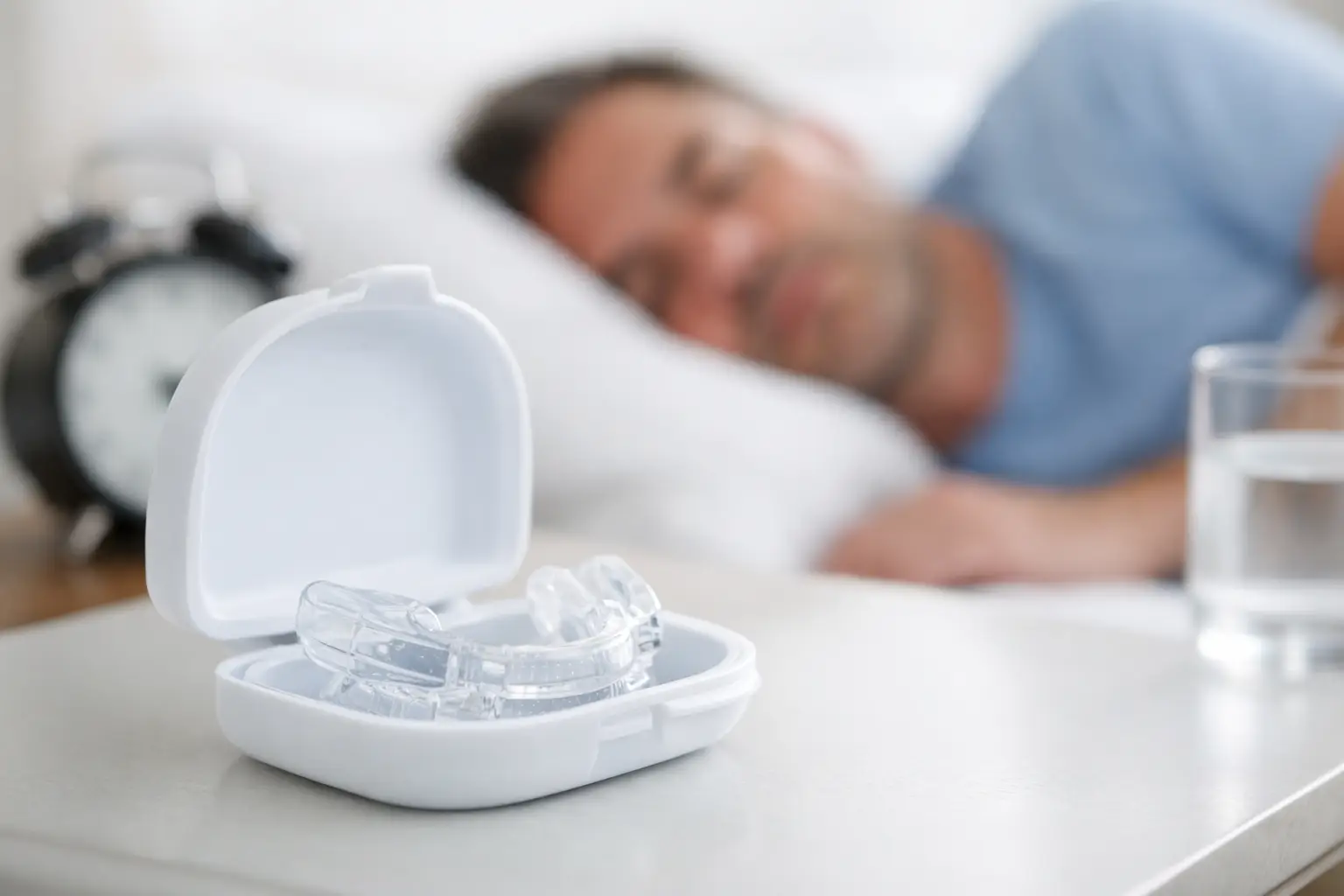
You may not notice your breathing stopping at night, but your body does. Waking up tired, snoring loudly, or feeling foggy through the day can all point to a problem that deserves attention. For many people, a sleep apnea mouthpiece is a practical treatment option that helps keep the airway open without the bulk and noise of a CPAP machine.
That said, not every mouthpiece is the same, and not every patient is a good fit for one. The right choice depends on the type of sleep apnea you have, how severe it is, your jaw and bite, and how consistently you will actually wear the appliance. A thoughtful evaluation matters because comfort and effectiveness need to go together.
What is a sleep apnea mouthpiece?
A sleep apnea mouthpiece is an oral appliance worn while you sleep. Its job is to help maintain a more open airway by adjusting the position of the jaw, tongue, or both. In most cases, the appliance works by gently moving the lower jaw forward, which can reduce airway collapse during sleep.
These appliances are often used for obstructive sleep apnea, which happens when the airway becomes blocked during the night. They can also help with snoring, especially when snoring is related to airway narrowing rather than simple nasal congestion. For patients who want a treatment that is small, portable, and easy to fit into daily life, an oral appliance can feel much more manageable.
How a sleep apnea mouthpiece works
When you fall asleep, the muscles in your throat relax. For some people, that relaxation allows the airway to narrow or close off too much. A sleep apnea mouthpiece helps by supporting the lower jaw in a forward position, which can create more room in the airway and improve airflow.
This sounds simple, but the details matter. A well-designed appliance should fit securely, feel stable, and apply controlled pressure without causing unnecessary strain on the teeth or jaw joints. If it is too loose, it may not work well. If it is too aggressive, it can become uncomfortable and hard to tolerate.
That balance is one reason custom appliances are usually a better long-term option than store-bought devices. Over-the-counter versions may seem convenient, but they are often bulkier, less precise, and more likely to cause soreness or inconsistent results.
Who may benefit from a sleep apnea mouthpiece
A sleep apnea mouthpiece may be recommended for adults with mild to moderate obstructive sleep apnea. It can also be a good option for patients with severe sleep apnea who cannot tolerate CPAP and need an alternative under the guidance of a qualified provider and sleep physician.
It may be especially appealing if you travel often, share a room with a partner, or simply know that you are unlikely to use a machine every night. Treatment only works when you use it, so lifestyle fit matters more than many people realize.
A mouthpiece can also be helpful for patients whose main concern is disruptive snoring. Still, snoring should not be brushed off as just an annoyance. In some cases, it is a sign of obstructive sleep apnea, and the safest first step is a proper diagnosis rather than guessing.
When it may not be the best fit
Oral appliance therapy is not a one-size-fits-all solution. If you have significant jaw pain, untreated dental problems, loose teeth, or very limited ability to move your lower jaw forward, a sleep apnea mouthpiece may not be ideal without addressing those issues first.
Some patients also have sleep apnea that is too complex or severe for a mouthpiece to manage effectively on its own. Others may start with an oral appliance and later need a combination approach that includes weight management, positional therapy, nasal treatment, or CPAP.
This is where careful screening becomes important. The best treatment is not the trendiest one. It is the one that fits your diagnosis, anatomy, and daily routine.
Custom vs. store-bought appliances
If you search online, you will find many boil-and-bite mouthpieces marketed for snoring and sleep apnea. The low price can be tempting. The problem is that low cost up front does not always mean good value.
A custom appliance is made to fit your teeth and bite more precisely. That usually means better comfort, better retention, and a better chance that you will wear it consistently. It also allows for gradual adjustment, which can improve results while minimizing jaw strain.
Store-bought options, on the other hand, often rely on a generic fit. Some patients try them first and quickly give up because they feel bulky, fall out, or leave the jaw sore in the morning. Others use them when they should really be getting evaluated for true sleep apnea, not just snoring.
What the treatment process usually looks like
Getting a sleep apnea mouthpiece should start with diagnosis, not guesswork. If sleep apnea is suspected, a sleep study is often needed to confirm it and determine severity. Once that is clear, an oral appliance provider can assess whether your teeth, bite, jaw joints, and airway make you a good candidate.
If you are, digital scans or impressions are used to create a custom appliance. Once the appliance is delivered, it is adjusted over time to find the position that improves breathing while staying comfortable. Follow-up matters because small changes can make a big difference in how well the appliance works.
In many cases, treatment does not end when the mouthpiece is delivered. Patients may need ongoing monitoring, and some providers recommend repeat sleep testing to confirm that the appliance is doing its job. That level of follow-through helps turn a promising option into a reliable one.
Comfort, side effects, and real-world trade-offs
Most people considering a sleep apnea mouthpiece want to know one thing first: will it be comfortable? The honest answer is that there is usually an adjustment period. Mild soreness, increased saliva, dry mouth, or temporary bite changes in the morning can happen, especially early on.
For many patients, these effects improve as they adapt and as the appliance is fine-tuned. But comfort is not automatic. The quality of the fit, the health of your jaw joints, and the way the appliance is adjusted all affect the experience.
There are trade-offs to keep in mind. A mouthpiece is smaller and quieter than CPAP, which many patients love. At the same time, CPAP may still be more effective for certain severe cases. The right question is not which treatment sounds easier on paper. It is which one will control your symptoms safely and realistically in everyday life.
Why orthodontic expertise can matter
Because a sleep apnea mouthpiece interacts directly with the teeth, bite, and jaw position, orthodontic knowledge can be especially valuable. A provider who understands how the appliance may affect alignment, jaw comfort, and long-term oral function can help you avoid unnecessary problems.
This can be especially helpful for patients who already have bite concerns, a history of orthodontic treatment, or TMJ symptoms. In those cases, treatment planning needs to look at the whole picture, not just nighttime breathing in isolation.
At a practice like 1st Impressions Orthodontics, that kind of careful, personalized approach matters. Advanced imaging, precise appliance design, and clear guidance can make treatment feel much more straightforward for patients who are already tired and overwhelmed.
Questions worth asking before you start
Before choosing any sleep apnea treatment, ask how your diagnosis was confirmed, whether the appliance will be custom-made, how adjustments are handled, and how success will be measured. You should also ask what side effects are possible and what happens if the first design does not feel right.
Those questions are not being difficult. They are part of making a smart, informed decision. Good care should feel clear, not rushed.
If you live in Westminster or nearby communities and have been dealing with snoring, daytime fatigue, or concerns about sleep apnea, it is worth getting real answers instead of trying to manage around the problem. Better sleep can change more than your nights. It can change how you feel at work, how present you are with family, and how much energy you bring into daily life.
A sleep apnea mouthpiece can be a very effective option for the right patient, especially when it is custom-made and thoughtfully monitored. The goal is not just to sleep with something in your mouth. The goal is to breathe better, sleep more deeply, and wake up feeling more like yourself.