
Waking up tired after a full night in bed can feel frustrating, especially when snoring, gasping, morning headaches, or daytime fatigue keep showing up. A sleep apnea oral appliance review can help you understand whether a small, custom-fit device may be a realistic part of your treatment plan – and whether it fits your sleep needs, comfort preferences, and lifestyle.
For many adults, the appeal is clear: no mask, no hose, and a treatment option that is compact enough for travel. But an oral appliance is not a one-size-fits-all replacement for CPAP. The best choice depends on the type and severity of sleep apnea, the anatomy of your airway and jaw, your dental health, and how well you can use the treatment consistently.
What Is a Sleep Apnea Oral Appliance?
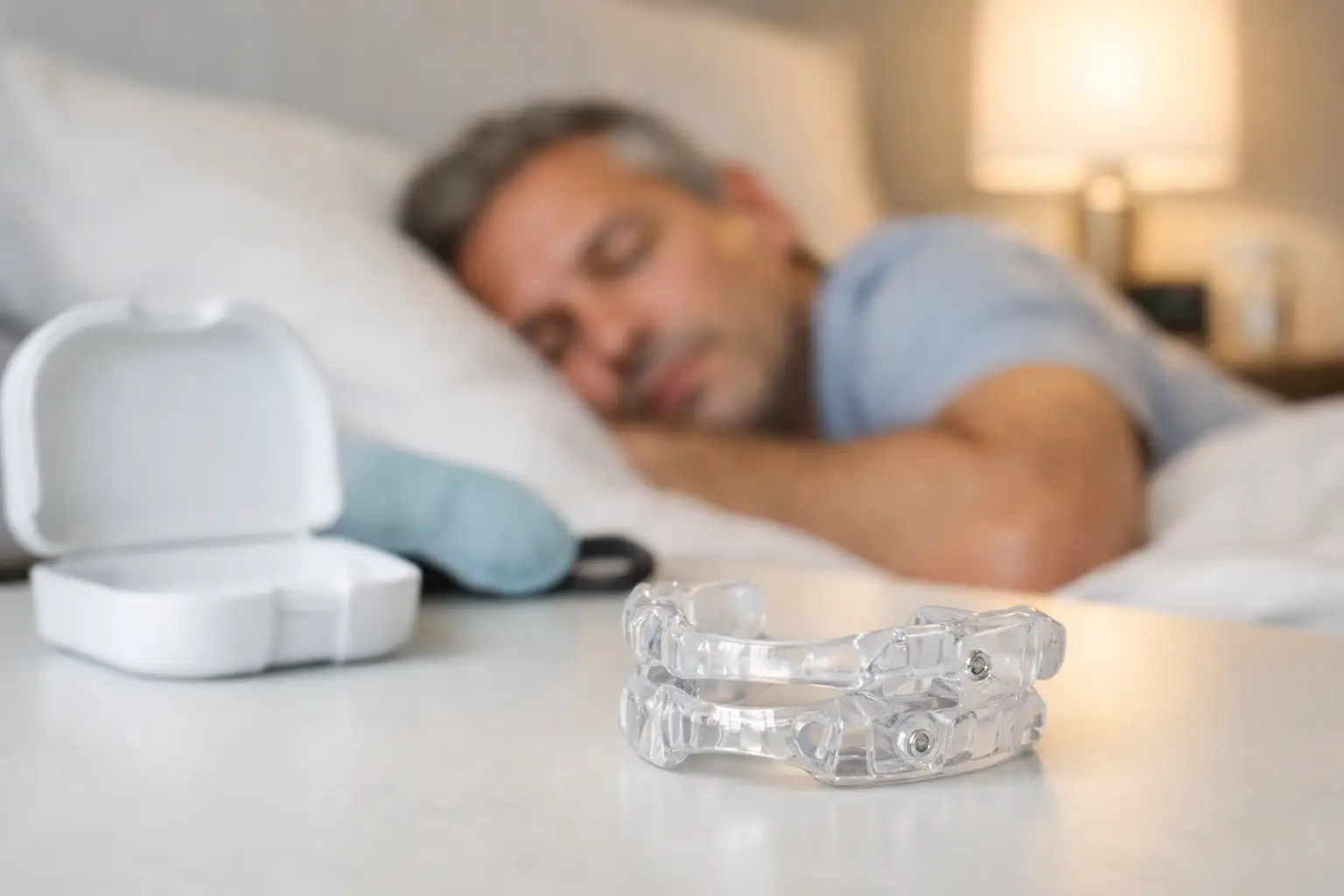
A sleep apnea oral appliance is a custom device worn over the teeth while you sleep. Most are mandibular advancement devices, meaning they gently hold the lower jaw slightly forward. That forward position can help keep the tongue and soft tissues from narrowing the airway during sleep.
The device may resemble a durable orthodontic retainer or sports mouth guard, but it is designed for a very different purpose. A professionally made appliance is adjusted in small, precise increments to balance airway support with jaw comfort. This is why a custom device is different from an over-the-counter snoring guard, which may not fit well, cannot be calibrated precisely, and is not a substitute for diagnosed sleep apnea treatment.
Oral appliances are commonly considered for adults with mild to moderate obstructive sleep apnea. They may also be an option for people with severe obstructive sleep apnea who cannot tolerate CPAP, although that decision should be made with a sleep physician and a qualified dental provider. Central sleep apnea requires different care and is not treated with a mandibular advancement appliance.
Sleep Apnea Oral Appliance Review: The Potential Benefits
The strongest advantage of an oral appliance is often consistency. A treatment only works when it is used. Some people find CPAP highly effective but struggle with mask leaks, pressure sensations, dry mouth, or the practical challenge of bringing equipment on frequent trips. A small custom appliance can feel more manageable for patients who want a discreet, portable option.
Many patients also appreciate that the appliance is quiet. It does not require electricity, and it generally takes up very little room in a suitcase or nightstand. For couples, reduced snoring can be a meaningful benefit, although snoring improvement alone does not confirm that sleep apnea has been adequately treated.
Comfort can be another positive, particularly after an adjustment period. The appliance is made from digital scans or impressions of your teeth, then refined to fit securely. It should not be loose, bulky, or painful. A thoughtful fitting process matters because the goal is not simply to move the jaw forward as far as possible. It is to find an effective position that you can comfortably maintain night after night.
Where Oral Appliances Have Limits
An honest review should include the trade-offs. CPAP remains the most consistently effective therapy for many people with moderate to severe obstructive sleep apnea because it uses gentle air pressure to keep the airway open. An oral appliance may reduce breathing events substantially without fully eliminating them for every patient.
Success also depends on the reason the airway narrows. Jaw position, tongue position, nasal breathing, body weight, sleep position, and the shape of the airway can all affect results. Someone with mild positional sleep apnea may do very well with an appliance. Someone with more severe airway obstruction may need CPAP, combination therapy, weight-management support, positional therapy, or an evaluation by an ear, nose, and throat specialist.
There can be side effects, especially early in treatment. Temporary jaw soreness, tooth pressure, excess saliva, dry mouth, or changes in the way the teeth come together are possible. Long-term bite changes can occur in some patients, which is one reason regular follow-up is essential. A provider who understands bite relationships can monitor your teeth, jaw joints, and appliance fit while making careful adjustments.
If you have significant untreated gum disease, loose teeth, extensive dental concerns, or active jaw pain, those issues may need attention before an appliance is appropriate. Patients with TMJ concerns are not automatically ruled out, but they need a more individualized evaluation and a conservative approach to adjustment.
Custom Appliance vs. Store-Bought Snoring Guard
A store-bought device may sound like an easier first step, but it has real limitations when sleep apnea is suspected. Snoring is common, yet it can be a symptom of a serious medical condition. Trying to self-treat without a sleep evaluation can delay care for low oxygen levels, disrupted sleep, high blood pressure, and other complications associated with untreated obstructive sleep apnea.
Custom appliances are prescribed after appropriate evaluation and are made to fit your teeth and bite. They can be adjusted in measured increments, repaired when needed, and monitored over time. Store-bought guards are often bulky, may shift during sleep, and can place uneven pressure on the teeth or jaw. More importantly, they do not tell you whether your breathing is actually improving.
A follow-up sleep test is often an important part of confirming treatment success. Feeling better is encouraging, but the goal is to verify that the appliance is effectively reducing sleep-disordered breathing.
What the Process Usually Feels Like
The process begins with a diagnosis from a sleep physician, often based on a home sleep test or an overnight study. If an oral appliance is a possible fit, the dental provider reviews your teeth, gums, bite, jaw movement, and airway-related concerns. Digital imaging and 3D records can help create a precise treatment plan without adding unnecessary stress to the process.
Once the appliance is made, you return for a fitting. You will learn how to place it, remove it, clean it, and gradually adjust it if your treatment plan calls for titration. Most patients need a period of adaptation. It is normal for the jaw to feel slightly different when you first wake up, but ongoing pain is not something to ignore.
Follow-up visits allow the provider to assess comfort, jaw function, tooth movement, snoring changes, and sleep quality. Patients should also continue routine care with their physician. Sleep apnea is a medical condition, and appliance therapy works best when your dental and medical teams communicate clearly.
Questions Worth Asking Before You Decide
A good consultation should leave you with clear answers, not pressure. Ask whether your sleep study shows mild, moderate, or severe obstructive sleep apnea and whether an oral appliance is likely to meet your treatment goals. Ask how the appliance will be customized, how adjustments are handled, and how the provider monitors bite changes over time.
It is also reasonable to ask about insurance coverage, total expected costs, warranty details, replacement needs, and follow-up testing. Coverage varies widely, so transparent guidance can prevent surprises. If you currently use CPAP, ask whether the appliance could be an alternative, a travel option, or part of a combined approach rather than assuming you must choose one treatment forever.
Is an Oral Appliance Right for You?
An oral appliance may be worth considering if you have diagnosed obstructive sleep apnea, snore regularly, cannot comfortably use CPAP, or want a treatment that is easier to travel with. It can also be a practical conversation to have if you wake with a dry mouth, feel exhausted despite adequate time in bed, or hear from a partner that you stop breathing during sleep.
At 1st Impressions Orthodontics, personalized care means looking beyond a generic device and considering how your airway needs, teeth, bite, and comfort work together. For patients in Westminster and nearby communities, a judgment-free consultation can clarify whether an appliance is appropriate and what next steps would look like.
Better sleep should not require guesswork. Start with a proper sleep evaluation, choose a treatment plan that you can use consistently, and give yourself the support needed to protect both your rest and your long-term health.