
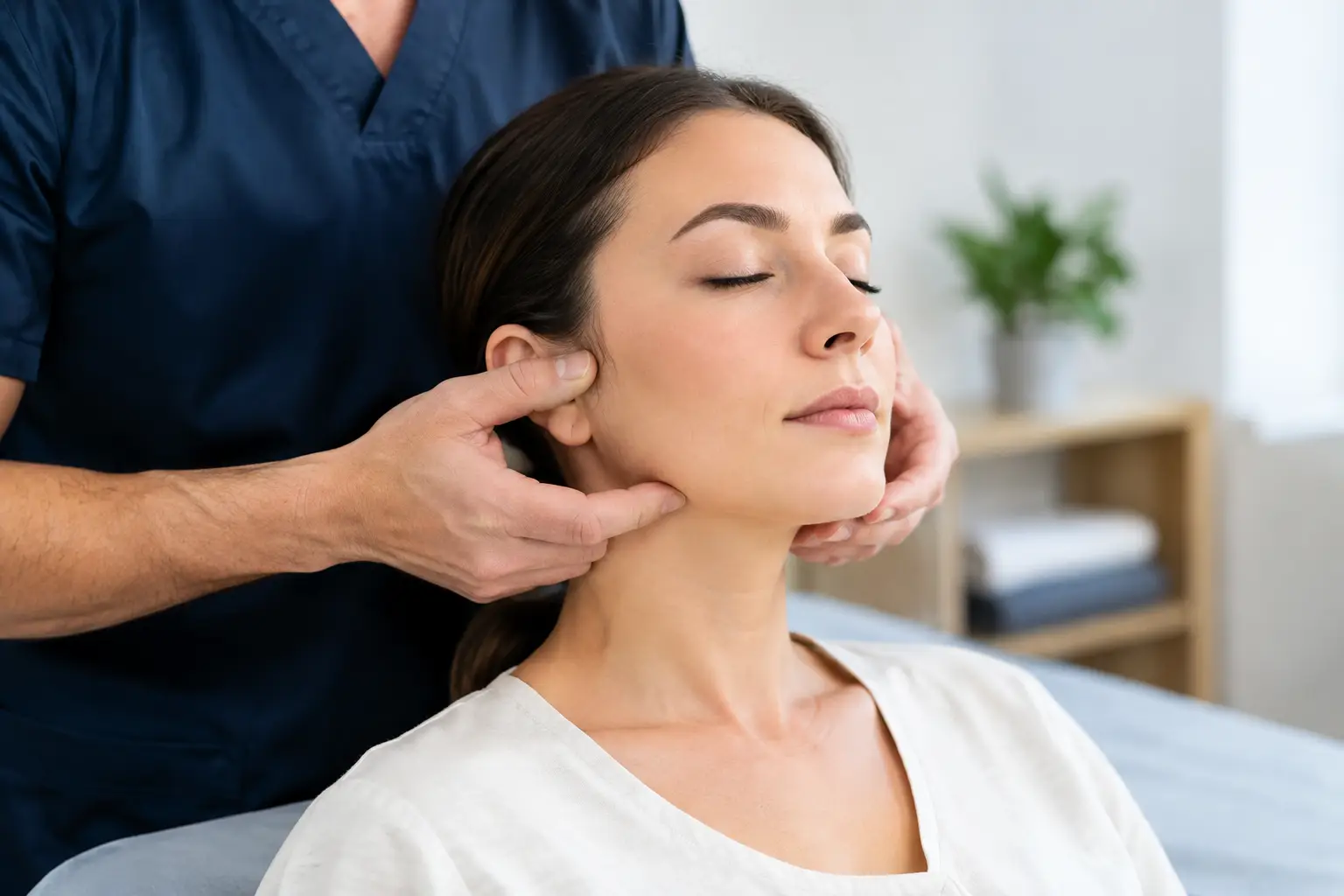
A sore jaw can make ordinary moments feel exhausting. Chewing a sandwich, speaking in a meeting, or waking up after a night of clenching may leave your face aching and your bite feeling “off.” TMJ therapy is designed to identify the source of that strain and create a comfortable, personalized path toward better jaw function.
The temporomandibular joints, often called TMJs, connect your lower jaw to your skull on each side of your face. They work alongside muscles, teeth, and your bite every time you talk, chew, yawn, or swallow. Because so many parts of the mouth and jaw work together, jaw discomfort rarely has one simple explanation. A careful evaluation matters.
When Jaw Symptoms Deserve Attention
Occasional jaw popping without pain is common and may not require treatment. But pain, limited movement, or changes in how your teeth fit together deserve a closer look. These symptoms can interfere with sleep, meals, work, school, and daily comfort.
Common signs of a TMJ-related problem include jaw soreness or fatigue, clicking or grinding with pain, headaches near the temples, tenderness around the ears, difficulty opening wide, and a jaw that feels like it catches or locks. Some people also notice neck tension or worn, chipped, or flattened teeth from frequent clenching or grinding.
These symptoms do not automatically mean there is damage to the joint. Jaw pain can be influenced by muscle tension, stress, sleep habits, injury, arthritis, tooth grinding, or how the upper and lower teeth meet. Sinus, ear, and dental concerns can also feel similar. That is why self-diagnosis can lead to the wrong solution.
What TMJ Therapy Can Address
TMJ therapy is not one single treatment. It is a tailored approach that aims to reduce strain, protect the teeth and joints, and improve the way the jaw moves. The right plan depends on the cause of symptoms, the condition of the bite, and how much discomfort is affecting everyday life.
For some patients, conservative care is the best first step. This may include temporary changes to food choices, heat or cold guidance, gentle jaw exercises, stress-aware habit changes, and strategies to avoid overworking the jaw. Small adjustments can be meaningful when inflamed muscles and joints need time to settle.
A custom oral appliance may be recommended when nighttime clenching or grinding is contributing to symptoms. Unlike a store-bought guard, a custom appliance is made to fit the teeth precisely and support a specific treatment goal. It may help protect enamel, reduce pressure from grinding, and give the jaw a more comfortable position during sleep. An appliance should be monitored over time so it continues to fit and function as intended.
When a misaligned bite is placing uneven pressure on the teeth and jaw, orthodontic treatment may also be part of the conversation. Braces or clear aligners can improve the relationship between the teeth and jaws in appropriate cases. Still, orthodontic treatment is not a universal cure for TMJ disorders. A responsible recommendation begins with determining whether bite correction is likely to address the underlying concern or whether another approach should come first.
Why a Bite Evaluation Matters
Your bite is more than the appearance of your smile. It affects how teeth contact during chewing and how forces are distributed across the mouth. If certain teeth hit too early or carry too much force, the jaw muscles may work harder to find a comfortable closing position.
During an orthodontic evaluation, the focus is not simply on whether teeth look straight. Your provider may assess how your jaw opens and closes, where tenderness occurs, whether teeth show signs of wear, and how the upper and lower teeth fit together. Digital imaging and 3D imaging, when appropriate, can provide a clearer view for precise planning.
This evaluation can be especially helpful for patients who have lived with recurring headaches, clenching, or jaw fatigue without realizing their bite may be involved. It also helps prevent a common mistake: treating the symptom without examining the forces that may be contributing to it.
What to Expect From TMJ Therapy
A thoughtful plan starts with listening. You should be able to describe when symptoms began, what makes them worse, whether you grind your teeth, and how the issue affects sleep, eating, or concentration. Details such as a recent injury, a new medication, a stressful season, or a history of orthodontic treatment can all be relevant.
After examining your jaw, teeth, bite, and surrounding muscles, your orthodontic team can explain what they see in plain language. If treatment is recommended, you should understand its purpose, expected timeline, and what improvement may realistically look like. Relief can be gradual, particularly when muscle tension or long-standing habits are involved.
Treatment may include monitoring rather than immediate intervention. If symptoms are mild and improving, a conservative plan can be preferable to aggressive treatment. On the other hand, persistent pain, locking, major limitation in opening, or a sudden bite change may require prompt assessment and possible coordination with another dental or medical specialist.
The goal is not to promise a quick fix. It is to reduce discomfort where possible, protect long-term oral health, and make decisions based on your specific needs rather than a one-size-fits-all protocol.
Everyday Habits That Can Support Relief
Professional care is the foundation of treatment, but daily habits can either calm or aggravate jaw symptoms. For a short period during a flare-up, choosing softer foods and taking smaller bites may reduce strain. Avoiding gum, chewing ice, nail biting, and repeatedly testing a popping jaw can also give irritated tissues a break.
Many people rest their jaw more than they realize by checking in throughout the day: lips together, teeth apart, tongue relaxed. Teeth are not meant to stay clenched when you are not chewing. If you notice yourself tightening your jaw while driving, working, or exercising, a simple reminder on your phone can help build awareness.
Sleep and stress also matter. Stress does not mean pain is imaginary. It can increase muscle tension and make clenching more frequent or intense. Consistent sleep routines, movement, relaxation techniques, and following the care plan recommended by your provider can all support progress.
Avoid forcing your jaw open, trying online exercises without guidance, or using an over-the-counter appliance as a long-term solution. What helps one person may worsen another person’s symptoms, particularly when the bite or joint itself is involved.
TMJ Therapy for Teens and Adults
Jaw discomfort is not limited to adults. Teens may clench during stressful school periods, grind at night, or experience bite-related concerns as their teeth and jaws continue to develop. Parents should pay attention if a teen reports frequent headaches, avoids certain foods because chewing hurts, or has difficulty opening their mouth comfortably.
For adults, the challenge is often fitting care into an already full schedule. Personalized planning can make treatment feel manageable, whether that means a custom appliance, a focused orthodontic evaluation, or coordination with a broader care team. Comfort and convenience should not come at the expense of careful diagnosis.
At 1st Impressions Orthodontics, patients can expect compassionate, judgment-free guidance and a clear explanation of their options. The purpose of care is to help you feel informed, supported, and confident about the next step.
If jaw pain is changing how you eat, sleep, speak, or smile, do not wait for it to become your normal. A personalized evaluation can bring clarity to what your jaw is telling you and help you move forward with greater comfort.