
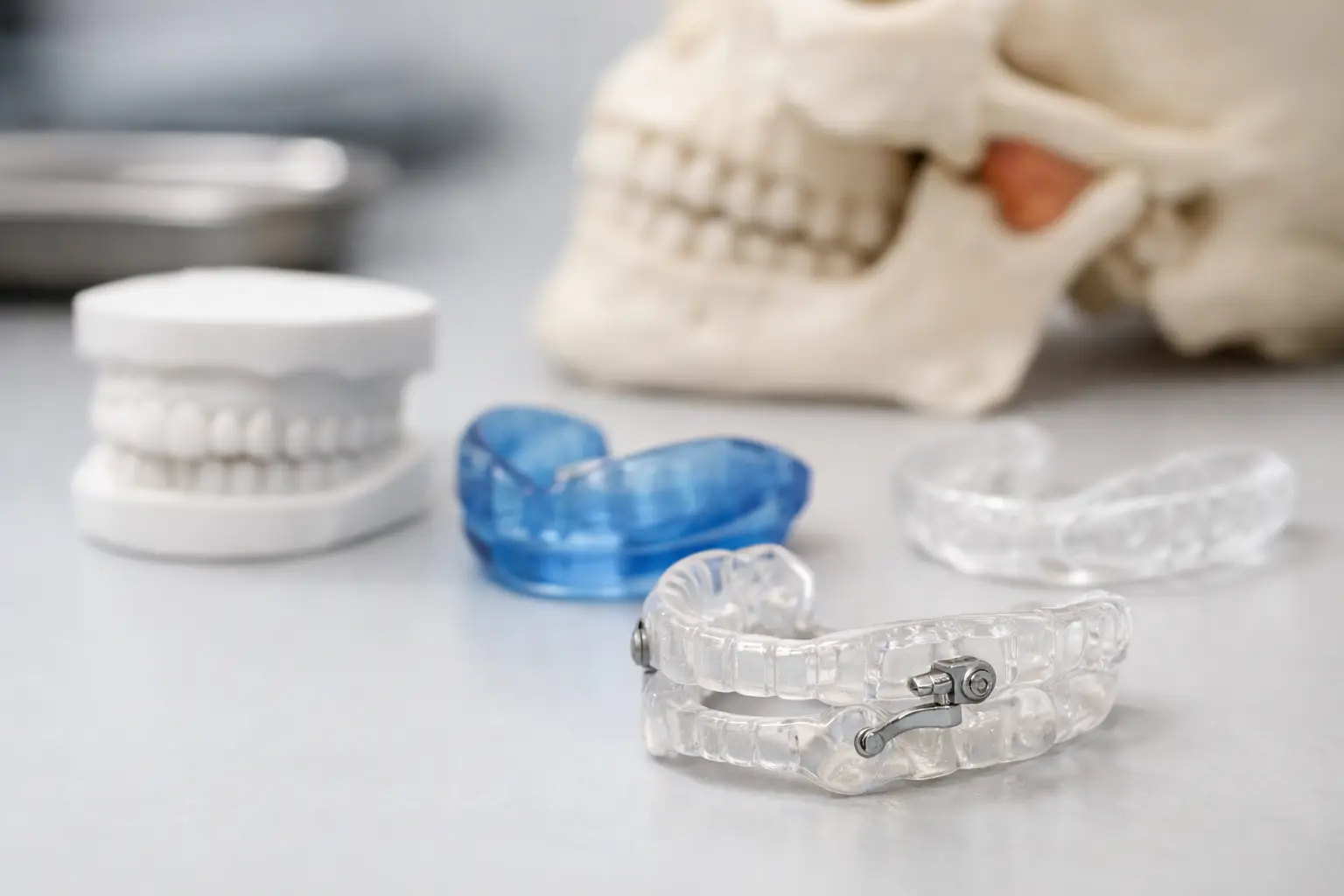
Jaw pain has a way of showing up at the worst times: during a busy workday, while eating dinner, or after a night of clenching you did not realize was happening. TMJ appliance options can help protect your teeth, reduce strain on the jaw joints and muscles, and give your bite a more comfortable place to rest. The right appliance is not a one-size-fits-all purchase, though. It should be chosen after a careful look at your symptoms, bite, teeth, and jaw function.
At 1st Impressions Orthodontics, we believe patients deserve clear guidance without pressure or confusing jargon. If you have jaw soreness, clicking, headaches, worn teeth, or frequent tension in your face and neck, a personalized evaluation can clarify whether an appliance may be part of your care.
What a TMJ Appliance Is Designed to Do
TMJ refers to the temporomandibular joints, the small but hardworking joints that connect your lower jaw to your skull. They work alongside the muscles, teeth, and bite every time you chew, speak, yawn, or swallow. Problems in this system are often called TMD, or temporomandibular disorder.
A TMJ appliance is a custom oral device that fits over the upper or lower teeth. Depending on its design and your needs, it may help reduce the effects of grinding or clenching, distribute biting pressure more evenly, limit certain jaw movements, or guide the jaw into a more comfortable position for a limited time.
An appliance is not a cure-all for every type of jaw pain. TMD can have several contributors, including muscle tension, tooth grinding, bite problems, stress, arthritis, injury, and sleep-related breathing concerns. That is why an exam matters. The goal is not simply to give you something to wear at night. It is to identify a thoughtful, conservative next step that supports your comfort and protects your teeth.
TMJ Appliance Options and When They May Help
Custom stabilization splints
A stabilization splint, sometimes called an occlusal splint, is one of the most common options. It is a smooth, durable appliance made to fit your teeth precisely, often worn at night. It creates an even biting surface and can help reduce the damaging contact caused by clenching or grinding.
This option may be recommended for patients with worn or chipped teeth, morning jaw fatigue, facial muscle soreness, or tension headaches that appear connected to nighttime grinding. It can also protect restorations and orthodontic results from excessive forces.
Comfort and fit make a meaningful difference. A professionally made splint is designed from impressions or digital scans of your teeth and adjusted to work with your bite. That precision can make it easier to wear consistently than a bulky, generic device.
Repositioning appliances
A repositioning appliance is designed to guide the lower jaw into a different position for a specific clinical reason. In some cases, this may help when there are certain joint-related symptoms, such as painful clicking, limited opening, or a jaw that feels as if it catches.
These appliances require careful supervision. Changing the way the jaw closes can be useful in the right situation, but it is not appropriate for every patient or meant to be worn indefinitely without monitoring. Your provider should track how your symptoms and bite respond over time, then adjust the plan as needed.
Anterior bite appliances
Some appliances cover only the front teeth or create contact in a limited area. They may be used in select situations to reduce the force on back teeth or calm overactive jaw muscles. Because they can alter how teeth meet if used improperly or for too long, they should only be used under professional direction.
For the right patient, a short-term anterior appliance can be a focused tool. For someone else, a full-coverage stabilization splint may be the safer and more practical choice. The details of your bite matter.
Orthodontic treatment as part of a bigger plan
When crowded teeth, a crossbite, an open bite, or another bite imbalance is contributing to uneven forces, orthodontic treatment may be part of a longer-term plan. Braces or clear aligners can improve tooth alignment and bite function, but they are not automatically the answer to jaw pain.
This is an area where honest guidance is especially valuable. Some patients need an appliance first to protect their teeth and calm symptoms. Others may benefit from orthodontic care after their jaw is stable. Your treatment should be built around your diagnosis, goals, and daily comfort, not a standard timeline.
Custom TMJ Appliances vs. Store-Bought Night Guards
Over-the-counter night guards can seem like a simple answer, particularly if you suspect teeth grinding. They are inexpensive and available quickly, but they are not designed around your individual bite. A poorly fitting guard can feel uncomfortable, fall out during sleep, encourage more chewing, or create uneven pressure on the teeth.
A custom TMJ appliance is created from detailed records of your teeth and bite. It is then checked and adjusted so the contacts are balanced and the fit is secure. This matters because your jaw is not static. Small differences in how an appliance meets your teeth can affect comfort, muscle activity, and the way your bite feels when you remove it.
A store-bought guard may be reasonable as a very temporary measure for some people, but it should not replace an evaluation when symptoms are persistent, worsening, or affecting daily life. If you wake up with severe pain, have trouble opening your mouth, notice a sudden bite change, or experience locking, schedule a professional assessment rather than trying to manage it alone.
What to Expect During an Evaluation
A TMJ evaluation should feel thorough and judgment free. Your provider will ask about your symptoms, daily habits, sleep, stress, previous dental work, and any history of injury. They may assess your jaw movement, listen for joint sounds, check for muscle tenderness, and look for signs of grinding or uneven tooth wear.
Digital imaging or 3D imaging may be helpful when a closer view of the teeth, jaws, and supporting structures is needed. Not every patient needs the same records. The purpose is to gather the information needed for a precise recommendation while keeping the process straightforward.
If an appliance is recommended, you can expect a digital scan or impression, followed by a custom-fabricated device and instructions for wear and care. Follow-up appointments are part of good TMJ care. Your symptoms may change, and a small adjustment can significantly improve the way the appliance feels and functions.
Habits That Can Support Your Treatment
An appliance works best when paired with habits that reduce unnecessary jaw strain. During the day, try to keep your teeth apart when you are not eating. Your lips can rest together, but your teeth do not need to touch. This simple awareness can help people who clench while concentrating, driving, or dealing with stress.
For irritated joints or muscles, softer foods and smaller bites may feel better for a short period. Avoid chewing gum, ice, pens, or tough foods if they trigger symptoms. Gentle heat, posture awareness, stress management, and provider-directed exercises can also be useful depending on the cause of your discomfort.
If sleep disruption, loud snoring, gasping, or daytime exhaustion are part of the picture, mention them during your visit. A sleep apnea oral appliance serves a different purpose than a TMJ appliance, although jaw health and sleep health can sometimes overlap. Getting the right diagnosis protects both your comfort and your long-term health.
Choosing the Right Path Forward
The best TMJ appliance is the one that matches your diagnosis, fits comfortably, and is monitored as your needs change. A custom stabilization splint may be an excellent choice for one patient who grinds at night, while another may need short-term repositioning care, orthodontic planning, physical therapy coordination, or referral to another healthcare provider.
You do not have to guess your way through jaw discomfort or settle for an appliance that feels wrong. A personalized orthodontic evaluation can give you a clearer picture of what is happening and a practical plan for moving forward with greater comfort and confidence.