
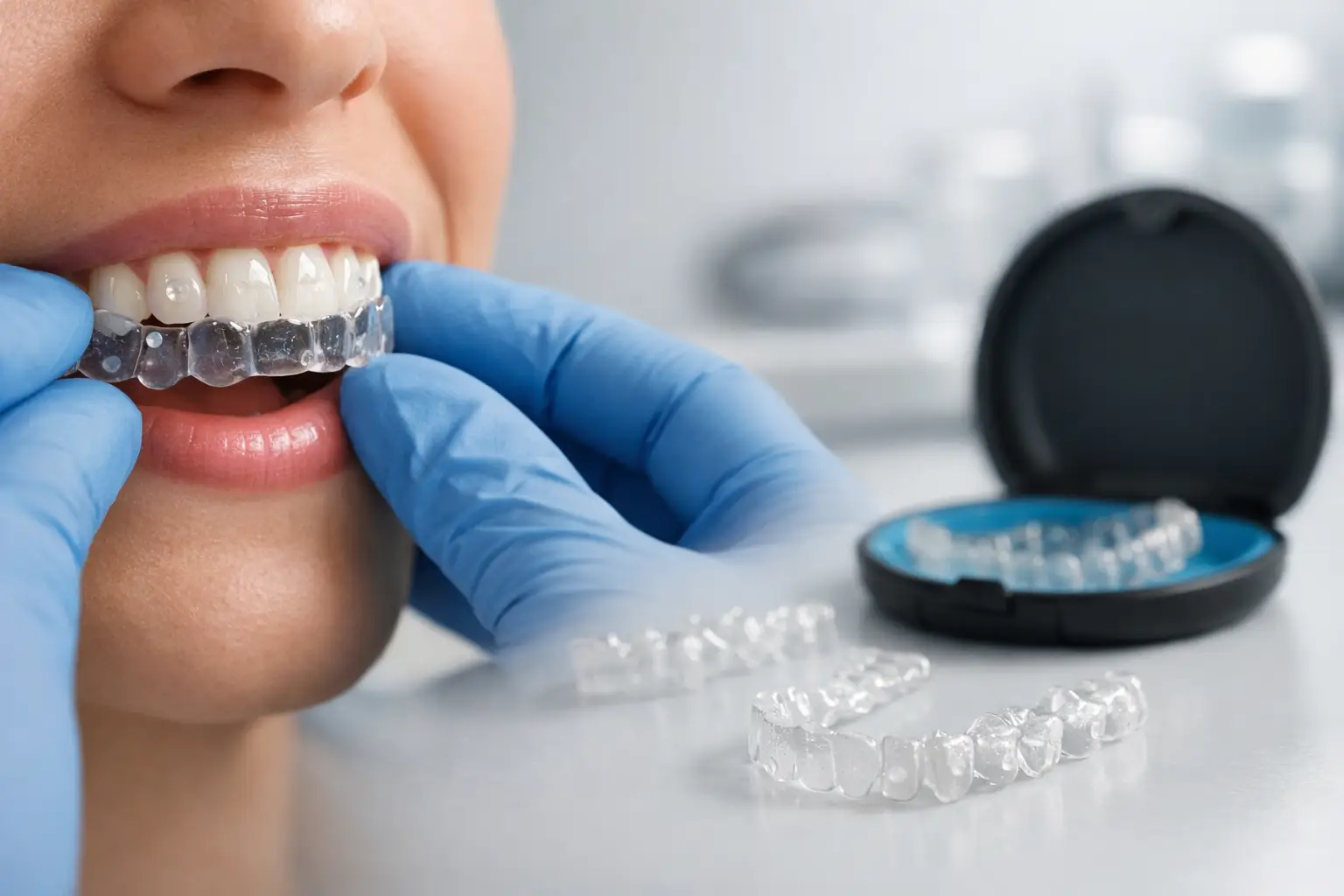
Those small, tooth-colored bumps on your teeth can be a surprise when you begin clear aligner treatment. This guide to Invisalign attachments explains what they do, why your orthodontist may recommend them, and how to care for them without letting a few tiny shapes disrupt your routine.
What Are Invisalign Attachments?
Invisalign attachments are small pieces of tooth-colored composite material bonded to selected teeth. They are shaped, placed, and polished by your orthodontist, then work with your clear aligners to create more precise force where it is needed.
Without attachments, an aligner mainly presses around the outside of a tooth. That is enough for some straightforward movements. But teeth do not always need to move in a simple direction. They may need to rotate, move up or down, shift forward or backward, or change position as part of bite correction. Attachments give the aligner something secure to grip so it can guide those movements more predictably.
Think of an attachment as a small handle built into your treatment plan. It is not decorative, and it is not a sign that anything has gone wrong. In many cases, it is simply part of the clinical precision that makes clear aligner treatment effective for more than minor crowding.
Why Invisalign Attachments May Be Needed
Every Invisalign plan is customized. Some patients need only a few attachments, while others may need several across the upper and lower teeth. Their number, size, shape, and placement depend on your teeth, bite, and treatment goals.
Attachments are often used when an orthodontist needs greater control over rotation, especially on rounded teeth such as canines and premolars. They can also help with moving teeth vertically, correcting spacing or crowding, improving the way the upper and lower teeth meet, and guiding more complex bite changes.
For example, a tooth that needs to rotate may otherwise slip slightly inside the smooth plastic aligner. An attachment creates a point of contact that helps the aligner apply the right pressure in the right direction. That extra control can make a meaningful difference in how accurately your teeth track through each stage of treatment.
Not every patient needs the same approach. A teen with moderate crowding, an adult correcting a relapse after braces, and a patient with a bite concern may all have very different attachment plans. Your orthodontist uses digital treatment planning and a detailed examination to determine what supports a healthy, stable result.
What Do Attachments Look and Feel Like?
Attachments are made to blend with the natural color of your teeth. They are usually far less noticeable than traditional braces, particularly when your aligners are in place. Up close, you may see small raised shapes, but most people will not notice them during an everyday conversation.
They can feel a little unfamiliar at first, especially when your aligners are out for meals or brushing. Your tongue and lips usually adjust quickly. When you wear your aligners, the attachments fit inside designated spaces in the trays, so they often feel less prominent.
The first few days after attachments are placed can bring mild tenderness or pressure. That sensation typically comes from your teeth responding to the aligners, not from the attachments themselves. It should be manageable and temporary. If an attachment feels sharp, rough, or irritating, let your orthodontic team know. A quick adjustment can often improve your comfort.
The Appointment for Getting Attachments
Placing attachments is a straightforward in-office procedure. Your orthodontist first prepares the tooth surface, applies the tooth-colored composite, and uses a special light to harden the material. A template helps ensure each attachment is placed in the planned location and shape.
The process does not require numbing, drilling, or shots. It is generally comfortable, though your mouth may be open for a short time. Once the attachments are polished, your orthodontic team checks that your aligners fit correctly and explains how to insert and remove them.
At 1st Impressions Orthodontics, treatment planning is designed around clear guidance and careful follow-through. That means you should understand not only that attachments are part of your plan, but also how they support the changes you want to see in your smile and bite.
Living With Invisalign Attachments
Attachments do not require a complicated lifestyle change, but consistent habits protect both your teeth and your treatment progress. The biggest priority is wearing your aligners for the schedule prescribed by your orthodontist, often close to full-time except for eating, drinking anything besides water, and cleaning your teeth.
Remove your aligners before meals unless your orthodontist has given you different instructions. This helps reduce staining and protects the trays. After eating, brush when you can and rinse your aligners before putting them back in. Food can collect around attachments just as it can around natural tooth contours, so thorough brushing matters.
Flossing is equally valuable. Attachments do not prevent you from flossing, but a floss threader or water flosser may make your routine feel easier if you are still getting used to treatment. Regular cleanings and exams with your general dentist remain an essential part of caring for your smile.
Some foods deserve extra caution. Very sticky candies can tug at an attachment, while hard foods can occasionally chip one. You do not need to be afraid of normal meals, but bite hard foods into smaller pieces rather than using your front teeth as tools. Avoid chewing ice, pens, or fingernails, which can damage teeth as well as attachments.
What if an Attachment Falls Off?
An attachment can occasionally come loose. This is not usually an emergency, and it does not mean you have failed at treatment. Save your aligners, continue wearing them unless your orthodontist tells you otherwise, and contact the office for guidance.
Whether you need an immediate visit depends on which attachment came off and where you are in your aligner series. Some attachments are critical to a particular movement; others may be less urgent. Your orthodontic team can review your plan and tell you whether the attachment should be replaced promptly.
Do not try to glue an attachment back on yourself. Household adhesives are not safe for your teeth or mouth, and they can interfere with the precise fit of your aligners.
Will Attachments Stain or Damage Teeth?
The composite used for attachments is durable, but it can pick up surface staining over time from coffee, tea, red wine, tobacco, and deeply colored foods. Because attachments are small and are covered by aligners much of the time, mild discoloration is often not obvious. Good brushing habits and professional cleanings help keep them looking their best.
When your treatment is complete, your orthodontist removes the attachments by carefully polishing away the composite. The goal is to leave the natural enamel smooth and intact. Attachments should not damage healthy teeth when placed and removed correctly by an experienced orthodontic team.
It is normal to notice a slightly different texture for a day or two after removal as you adjust to having smooth tooth surfaces again. Most patients are simply excited to see their finished smile without the attachments or aligners.
How Attachments Affect Treatment Time
Attachments do not automatically make treatment longer. In fact, because they help aligners create more controlled movements, they can support efficient progress. Treatment time depends on the complexity of your starting alignment, bite needs, how consistently you wear your trays, whether teeth track as planned, and whether refinement aligners are needed near the end.
The most reliable way to keep treatment moving is to wear each set exactly as directed and attend scheduled check-ins. If an aligner does not sit fully over an attachment, do not force it or ignore the gap. Contact your orthodontist. Sometimes a simple adjustment, a replacement attachment, or more focused use of aligner seating aids can help get things back on track.
A Small Detail With a Big Purpose
Invisalign attachments may be small, but they reflect the thoughtful planning behind clear aligner treatment. They allow your orthodontist to guide teeth with greater accuracy while preserving the convenience and subtle appearance many teens and adults prefer.
If you are considering Invisalign or have questions about attachments in your own plan, a personalized orthodontic consultation can replace uncertainty with clear, judgment-free answers. Knowing why each part of treatment is recommended makes it easier to wear your aligners confidently and stay focused on the smile ahead.