
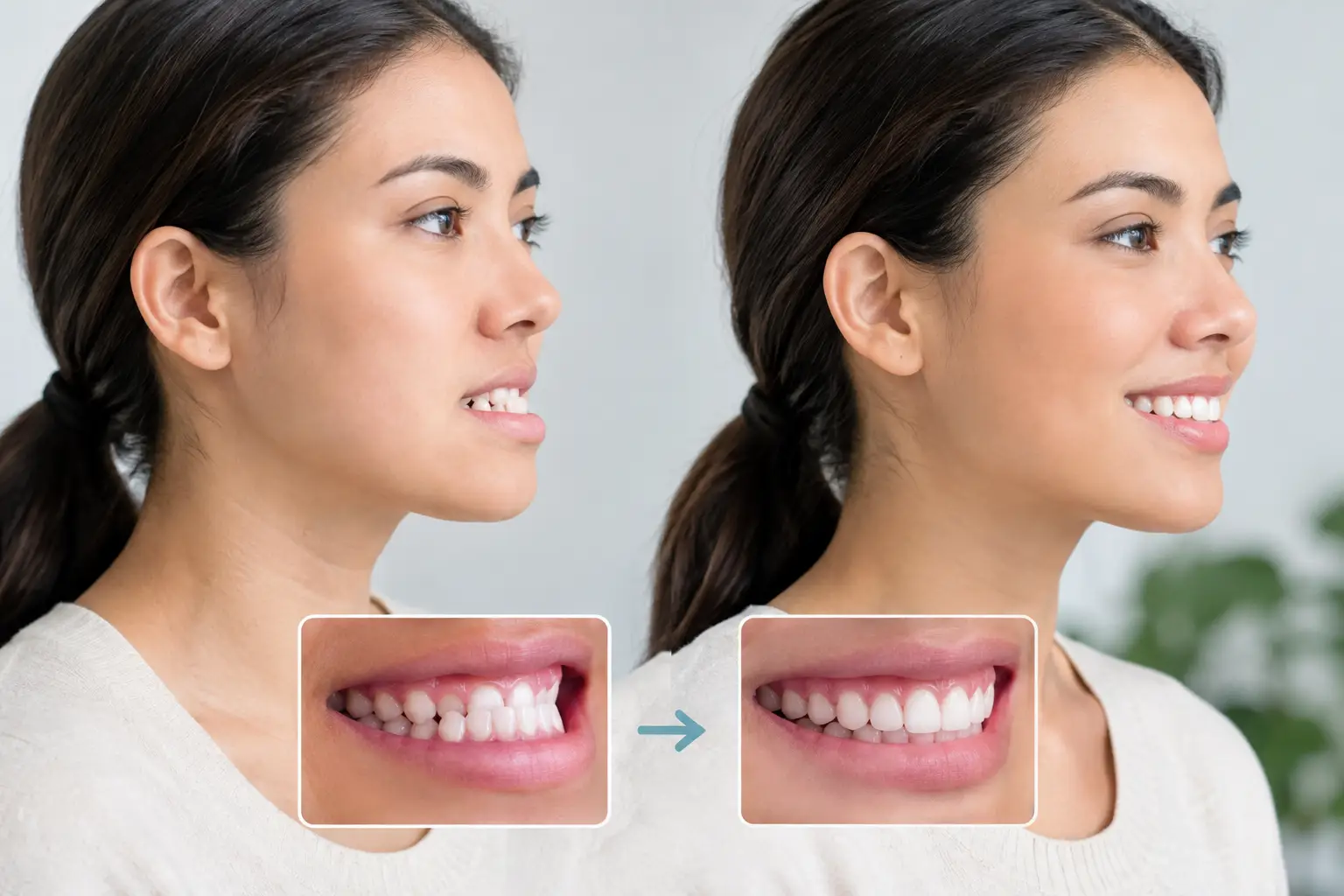
When people search for an underbite correction example, they are usually trying to picture one thing: Can treatment really change the way my teeth meet and the way my smile looks? In many cases, yes. But an underbite is not one-size-fits-all. The best result depends on whether the concern comes mainly from tooth position, jaw growth, or a combination of both.
An underbite happens when the lower front teeth sit in front of the upper front teeth when the mouth is closed. It may be mild and mostly noticeable in photos, or it may affect chewing, speech, tooth wear, and jaw comfort. A personalized orthodontic evaluation is the clearest way to understand what is causing it and which approach makes sense for you or your child.
An Underbite Correction Example in Real Life
Consider a teenager whose lower front teeth sit slightly ahead of the upper teeth. Their upper teeth are crowded and tipped inward, while the lower teeth are fairly straight. They can chew, but biting into foods such as sandwiches or pizza feels awkward. They are also becoming more self-conscious about their smile.
After digital images and a complete orthodontic exam, the orthodontist determines that the jaw relationship is relatively balanced. In this example, the underbite is driven primarily by the position of the teeth, not by a severe difference in jaw size. Braces may be used to gently align the teeth, create the right amount of space, and guide the upper and lower teeth into a healthier bite relationship. Small elastic bands may also be part of treatment, depending on the movement needed.
Over time, the upper front teeth can be brought forward into a more natural position while the lower teeth are aligned for a stable fit. The visual change can be meaningful, but the goal is bigger than appearance. Proper bite correction helps distribute chewing forces more evenly and can reduce the risk of uneven tooth wear.
This is an encouraging underbite correction example, but it does not mean every underbite can be corrected with braces alone. That distinction matters. A thoughtful treatment plan should be built around your anatomy, growth stage, oral health, and long-term bite stability – not around a generic before-and-after image.
Why Underbites Look and Feel Different From Person to Person
Two people can both have an underbite and need very different care. One person may have a few upper teeth trapped behind the lower teeth. Another may have a lower jaw that has grown farther forward than the upper jaw. A third may have an upper jaw that did not develop forward enough. The teeth can camouflage a jaw difference to a point, but orthodontics must work within healthy, realistic limits.
Age can also influence treatment options. Children still have active jaw growth, which can create an opportunity for early interceptive orthodontic treatment. In selected cases, guiding upper jaw development or correcting a developing crossbite early may reduce the severity of a bite issue later. Early treatment does not always eliminate the need for braces in the teen years, but it can make later care more straightforward.
For teens and adults, treatment focuses on the relationship that exists after most jaw growth is complete. That may involve braces, clear aligners, elastics, or other orthodontic techniques. When a jaw imbalance is significant, a coordinated approach involving orthodontics and oral and maxillofacial surgery may offer the most complete correction. Surgery is not the answer for every adult underbite, and it should never be presented as the automatic next step. It is considered when the jaw position itself is the central concern and nonsurgical orthodontics cannot achieve a healthy, stable bite.
What Treatment May Look Like
For a mild to moderate dental underbite, braces are often a reliable option because they give the orthodontist precise control over individual teeth. Clear braces can make treatment less noticeable, while traditional metal braces remain efficient, durable, and often a great choice for more complex movement.
Invisalign clear aligners may be appropriate for certain underbite cases, particularly when tooth movement is the primary need and the patient can wear the aligners consistently. Aligners are removable for meals and brushing, which many working adults and teens appreciate. However, removability is also the trade-off. Wearing aligners for the recommended number of hours each day is essential, and some bite corrections are more predictable with braces.
Elastics are commonly used to support bite correction. These small bands connect the upper and lower teeth in a prescribed pattern and help guide the bite toward the intended relationship. They may seem simple, but consistent wear can make a major difference in how efficiently treatment progresses.
In more complex cases, treatment may include additional planning tools or collaboration with other dental specialists. Advanced 3D imaging can help clarify jaw and tooth positions when needed, allowing decisions to be made with greater precision. The plan should always be explained in plain language: what is changing, why it matters, how long treatment may take, and what your responsibilities will be at home.
What Results Can You Reasonably Expect?
A successful correction is not simply about getting the top teeth in front of the bottom teeth. Orthodontists look for a bite that functions comfortably, supports healthy tooth position, and looks natural with your facial features. That can mean easier chewing, improved alignment, less stress on particular teeth, and a smile that feels more like you.
Treatment time varies widely. A limited dental correction may take less time than a comprehensive case involving crowding, spacing, bite discrepancies, or jaw concerns. Your progress also depends on factors you can control, including keeping appointments, maintaining excellent brushing and flossing habits, wearing elastics as directed, and using aligners consistently if they are part of your plan.
Retainers matter after active treatment ends. Teeth have a natural tendency to shift, especially after they have been moved to correct a bite. A custom retainer helps protect the result you worked for. Think of it as the final, ongoing step in preserving your smile and bite, not an optional extra.
When Should You Schedule an Orthodontic Evaluation?
For children, an orthodontic checkup is worth considering when you notice the lower front teeth crossing in front of the upper teeth, difficulty biting or chewing, uneven jaw movement, or a developing facial asymmetry. Early assessment does not always mean immediate treatment. Sometimes the best recommendation is simply monitoring growth at the right intervals.
Adults should not assume they have missed their chance. Healthy teeth can move at nearly any age, and adult orthodontic care can address many dental underbites with a plan that respects your schedule, comfort, and cosmetic goals. If you have jaw pain, significant wear on your front teeth, gum concerns, or a bite that feels unstable, a comprehensive exam is especially valuable.
At 1st Impressions Orthodontics, the conversation starts with clear guidance, not pressure. A complete evaluation can help identify whether your underbite is primarily dental, skeletal, or mixed, then outline the options that fit your goals and lifestyle.
The most helpful next step is simple: have an orthodontist evaluate the bite you have, rather than comparing it to someone else’s photo. With a personalized plan and consistent care, a healthier, more comfortable smile may be closer than you think.