
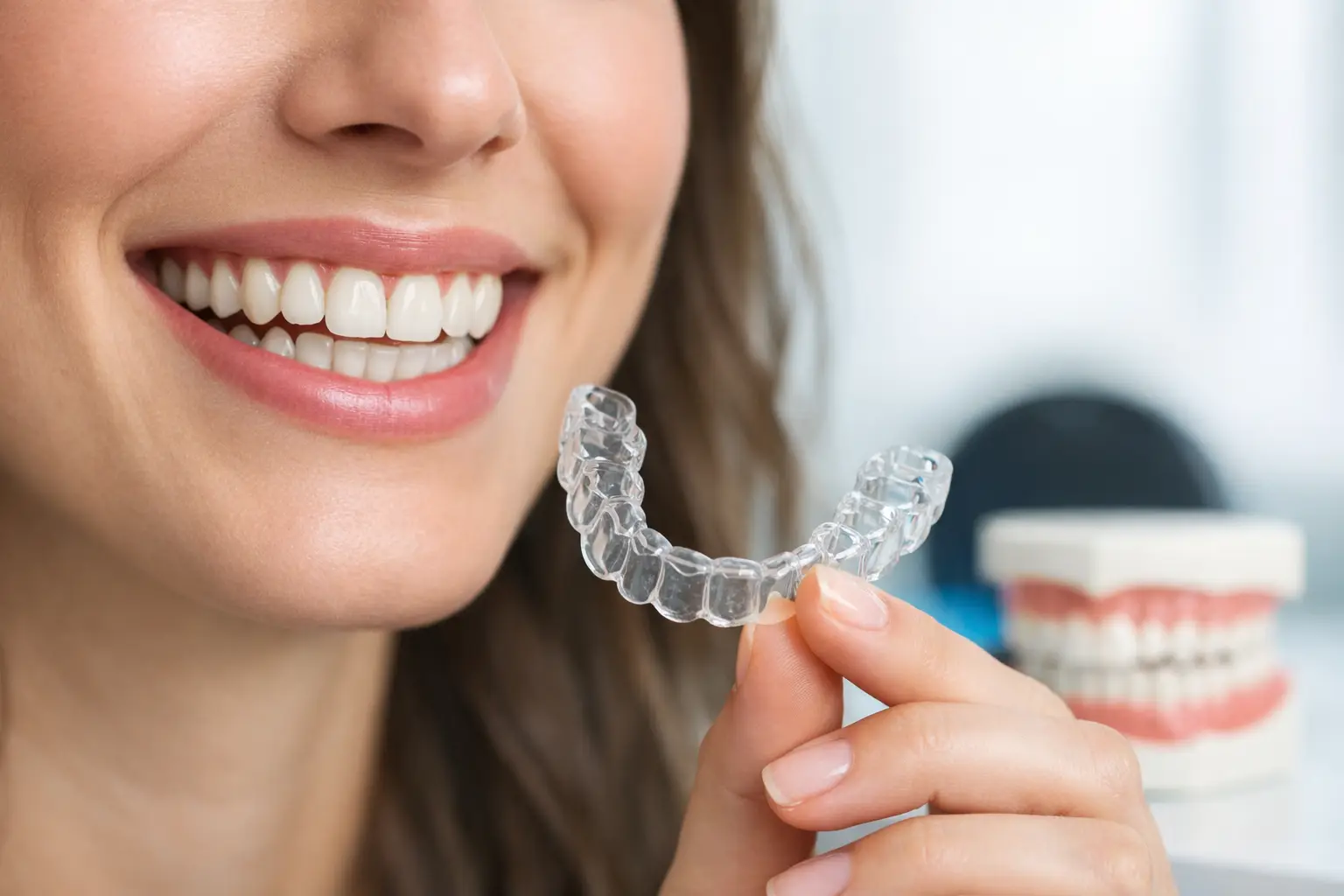
If your top front teeth cover too much of your bottom teeth when you bite down, you may be wondering, can Invisalign fix deep bite without braces? The short answer is yes – in many cases, Invisalign can improve or correct a deep bite. The better answer is that it depends on what is causing the bite problem, how severe it is, and how consistently the aligners are worn.
A deep bite is more than a cosmetic issue. For some patients, it can lead to uneven tooth wear, pressure on the front teeth, gum irritation, jaw strain, or even chipping. Others simply notice that their smile looks crowded or that their lower teeth seem to disappear when they close their mouth. Either way, the right treatment starts with understanding the bite itself, not just straightening the visible teeth.
Can Invisalign fix deep bite in adults and teens?
Invisalign can treat many deep bites in both teens and adults. Clear aligners are designed to move teeth gradually, and with the right treatment plan, they can help reduce excessive overlap between the upper and lower front teeth. That may involve intruding certain teeth, moving others into a better position, or coordinating both arches so the bite closes more evenly.
For mild to moderate deep bites, Invisalign is often a strong option. It can be especially appealing for working adults and teens who want a more discreet treatment experience. The aligners are removable, smooth, and easier to keep clean than brackets and wires. For families balancing school, work, and activities, that convenience matters.
That said, not every deep bite responds the same way. Some cases are straightforward. Others involve jaw growth patterns, significant crowding, worn teeth, or skeletal differences that make treatment more complex. In those situations, Invisalign may still be possible, but the plan may require attachments, elastics, longer treatment, or a different appliance altogether.
What makes a deep bite treatable with Invisalign?
The key question is not just whether Invisalign can fix deep bite. It is whether Invisalign is the best tool for your specific bite.
A deep bite can happen for different reasons. Sometimes the upper front teeth have erupted too far down. Sometimes the lower front teeth are positioned in a way that deepens the overlap. In other cases, the back teeth do not provide enough vertical support, which allows the bite to collapse more deeply in front. Habits, genetics, tooth wear, and jaw structure can all play a role.
When an orthodontist evaluates a deep bite, they are looking at more than the front teeth. They want to see how your teeth fit together, how your jaws relate to each other, whether there is crowding or spacing, and whether the bite issue is mainly dental or skeletal. Digital scans and imaging help make that decision more precise.
Invisalign tends to work well when tooth movement can correct the bite without needing major skeletal change. If the problem is largely dental, aligners may be an excellent fit. If the problem is more structural, braces or other orthodontic approaches may offer better control.
How Invisalign corrects a deep bite
Clear aligners do not just straighten crooked teeth. They can be programmed to make very specific bite changes over time.
In deep bite treatment, Invisalign may intrude the front teeth slightly so they do not overlap as much. It may also help level and align the arches, create the right amount of space, and improve the contact between upper and lower teeth. In some cases, small tooth-colored attachments are placed on certain teeth to give the aligners more grip and control. Elastics may also be used if the bite needs additional guidance.
This is one reason specialist oversight matters. Deep bite correction is not the same as basic cosmetic alignment. The goal is to improve function, protect the teeth, and create a bite that is stable long term.
Why precision matters
Moving front teeth is only part of the job. If the bite is opened too much or in the wrong way, chewing can feel off and the result may not hold as well. Good treatment planning focuses on balance – smile appearance, bite function, comfort, and retention all matter.
That is where advanced imaging and customized planning make a real difference. A detailed evaluation can show whether aligners can deliver the movements needed or whether another option would be more efficient and predictable.
When braces may be better than Invisalign
There are times when braces are simply the better choice. That does not mean Invisalign failed. It means the orthodontic goal requires a different kind of control.
Very severe deep bites, complex jaw discrepancies, major tooth rotations, or cases involving significant vertical changes may respond better to braces. Braces can sometimes provide more direct force and more flexibility for difficult movements. For younger patients who are still growing, other appliances may also be considered depending on the bite pattern.
Compliance is another factor. Invisalign only works if it is worn as directed, usually 20 to 22 hours a day. If a patient knows that will be hard to maintain, braces may actually be the lower-stress option because they are always working.
This is why a judgment-free consultation matters. Treatment should fit your needs and your lifestyle, not just a trend or preference.
How long does Invisalign take for a deep bite?
Treatment time varies. Some mild deep bites improve in less than a year, while more involved cases may take 12 to 24 months or longer. The timeline depends on the severity of the bite, whether crowding or spacing also needs correction, how your teeth respond to movement, and how faithfully the aligners are worn.
Refinements are common and not usually a sign of a problem. Orthodontic treatment is highly customized, and sometimes an extra series of aligners is needed to fine-tune the bite. That is normal, especially in cases where bite correction is just as important as cosmetic alignment.
Patients often ask whether Invisalign works slower than braces. The honest answer is that it depends. In some cases, Invisalign is just as effective and efficient. In others, braces may move certain teeth more directly. The best option is the one that gives you the safest, most predictable result.
What to expect during treatment
Most patients with Invisalign for deep bite treatment will change aligners on a set schedule and come in for periodic check-ins. You may have small attachments bonded to some teeth. These help the trays perform more precise movements and are a normal part of modern Invisalign treatment.
At the beginning, your bite may feel different as the teeth start to shift. That can be a strange sensation, but it is usually temporary. Some patients notice pressure for a day or two after switching trays. Mild soreness is common, but it generally fades quickly.
You will also need to stay consistent. Removing aligners too often or leaving them out for long stretches can slow progress and affect how well the deep bite improves. If convenience is one of the reasons you are considering Invisalign, that flexibility is real – but it still comes with responsibility.
Can Invisalign fix deep bite permanently?
Orthodontic treatment can create a healthy, improved bite, but keeping the result depends on retention. Teeth naturally have a tendency to shift over time, especially after active treatment ends. Retainers help protect the investment you made in your smile and bite.
A stable result also depends on accurate diagnosis from the beginning. If the bite was corrected in a way that respects your tooth positions, jaw relationship, and long-term function, the outcome is more likely to last well. If not, relapse becomes more likely.
That is why deep bite treatment should never be approached as just a cosmetic fix. The best results come from careful planning and close follow-through.
Is Invisalign right for your deep bite?
If you are asking can Invisalign fix deep bite, the real next step is a professional evaluation. Many patients are good candidates, and clear aligners can be a comfortable, discreet way to improve both smile appearance and bite function. But the decision should be based on your bite, not someone else’s before-and-after photos.
A personalized orthodontic exam can show how severe the deep bite is, what is causing it, and whether Invisalign is likely to give you the result you want. In a practice like 1st Impressions Orthodontics, that conversation should feel clear, supportive, and specific to you.
If your bite has been bothering you, or if you have been told you may need braces but hoped for a more discreet option, it is worth getting answers. The right treatment plan should make your smile healthier and your life easier, not leave you guessing.